
Modern enterprises depend on a wide range of IT infrastructure, applications, networks, and endpoints to keep daily operations running smoothly. As these environments become more complex, IT teams need more than separate monitoring and service management tools. They need a connected approach that allows infrastructure issues to be identified quickly, converted into actionable service requests, and resolved with minimal disruption. This is where the integration between ServiceDesk Plus and OpManager can provide significant operational value.
Why Integrating IT Service Management and Network Monitoring Matters
IT teams often use monitoring platforms to identify infrastructure problems while service desk teams manage incidents and requests through a separate system. Without integration, information can remain fragmented between technical and support teams. IT service management in Saudi Arabia initiatives increasingly focus on connecting these functions so that alerts, incidents, and resolution activities can move through a coordinated workflow.
With ServiceDesk Plus and OpManager working together, organizations can connect infrastructure monitoring with service management processes. OpManager continuously monitors devices, servers, networks, and other infrastructure components, while ServiceDesk Plus provides structured workflows for incident management, service requests, changes, and support operations. This connection helps teams move from simply detecting problems to managing their business impact.
A Practical Enterprise Scenario

Consider an organization operating a business-critical application across multiple servers. One of the application servers begins experiencing unusually high resource utilization. OpManager detects the abnormal behavior and generates an alert. Instead of requiring an engineer to manually review the monitoring dashboard and then create a service ticket, the integration can help initiate the incident management process automatically.
For organizations evaluating OpManager implementation in Saudi Arabia, this type of workflow demonstrates how monitoring data can become part of a structured service management process. The technical team receives the relevant information while the service desk can track the issue through an established incident workflow. This reduces the gap between infrastructure monitoring and user support.
From Alert to Incident
The key advantage of integration is the ability to connect an infrastructure event with an appropriate service desk action. When OpManager identifies a predefined issue, relevant alerts can be associated with incidents in ServiceDesk Plus. Information such as the affected device, alert condition, and event details can provide the service desk with useful technical context.
For organizations planning ServiceDesk Plus implementation in Egypt, this approach can help create a more consistent incident-handling process. Instead of relying entirely on manual communication between monitoring and support teams, predefined workflows can help route issues to the appropriate technicians. The service desk can then monitor progress, assign ownership, communicate with users, and maintain a record of the resolution.
Improving Collaboration Between IT Teams
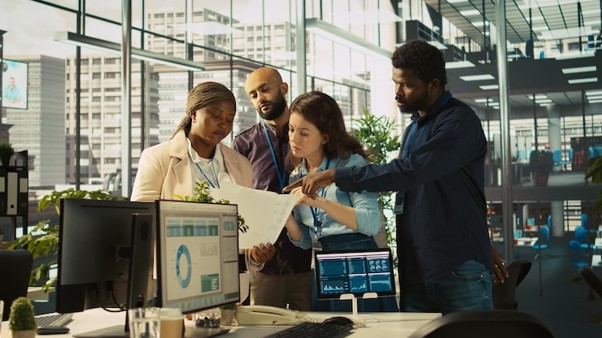
A connected environment also improves collaboration between network administrators, system engineers, help desk teams, and IT managers. Monitoring specialists can concentrate on identifying and diagnosing infrastructure problems, while service desk personnel can manage communication, ticket ownership, priorities, and service-level processes.
This is particularly useful for organizations developing broader IT operations management in Egypt strategies. When operational information is connected across monitoring and service management functions, teams can gain a clearer view of recurring issues and their operational impact. Historical ticket information can also support future troubleshooting and help identify areas where preventive action may be required.
Reducing Manual Processes
Manual ticket creation can consume valuable time, particularly when IT teams manage large and distributed environments. An integrated workflow can reduce repetitive tasks by allowing selected monitoring events to initiate service management actions according to predefined rules.
For businesses considering ManageEngine reseller in Saudi Arabia services, integration capabilities can also be an important part of evaluating an overall IT management environment. The objective should not simply be to deploy individual products, but to determine how different capabilities can work together to support practical operational requirements.
Better Visibility Into IT Performance
Integration can also provide management teams with a broader perspective on IT performance. Monitoring data shows what is happening within the infrastructure, while service management data provides information about incidents, requests, response times, and resolution activities. Bringing these perspectives together can help organizations understand not only whether an infrastructure component is experiencing an issue, but also how that issue is being handled.
This combined visibility can support more informed decisions around recurring incidents, infrastructure improvements, resource allocation, and service quality. Over time, organizations can use historical information to identify patterns and improve operational processes.
Supporting a More Proactive IT Environment
The value of integration extends beyond responding to individual alerts. When monitoring and service management systems are connected, organizations can establish processes that support more proactive IT operations. Repeated alerts can be analyzed alongside historical incidents, allowing technical teams to investigate underlying causes rather than repeatedly addressing the same symptoms.
For companies exploring IT management solutions in Saudi Arabia, this integrated approach can form part of a wider strategy for improving operational efficiency. The focus shifts from isolated monitoring and ticket handling toward a connected process in which detection, response, documentation, and analysis work together.
Key Considerations Before Implementation
Successful integration requires more than connecting two platforms. Organizations should first identify which monitoring events should generate incidents and determine appropriate thresholds, priorities, assignment rules, and escalation procedures. Not every alert needs to become a service ticket, as excessive ticket creation can overwhelm support teams.
It is also important to define responsibilities between infrastructure and service desk teams. Clear ownership ensures that alerts are handled consistently and that incidents do not remain unresolved because teams are uncertain about who should take the next action. Testing workflows before production deployment can further help identify unnecessary alerts and refine automation rules.
Conclusion
The integration of ServiceDesk Plus and OpManager provides enterprises with a practical way to connect infrastructure monitoring with structured service management. By linking alerts, incidents, workflows, and operational information, organizations can reduce manual effort, improve collaboration, strengthen visibility, and create a more coordinated approach to IT operations.
For organizations looking to build a connected and scalable IT environment, Trust Arabia can support the journey by helping businesses evaluate and implement solutions that align with their operational requirements.

Recent Comments